
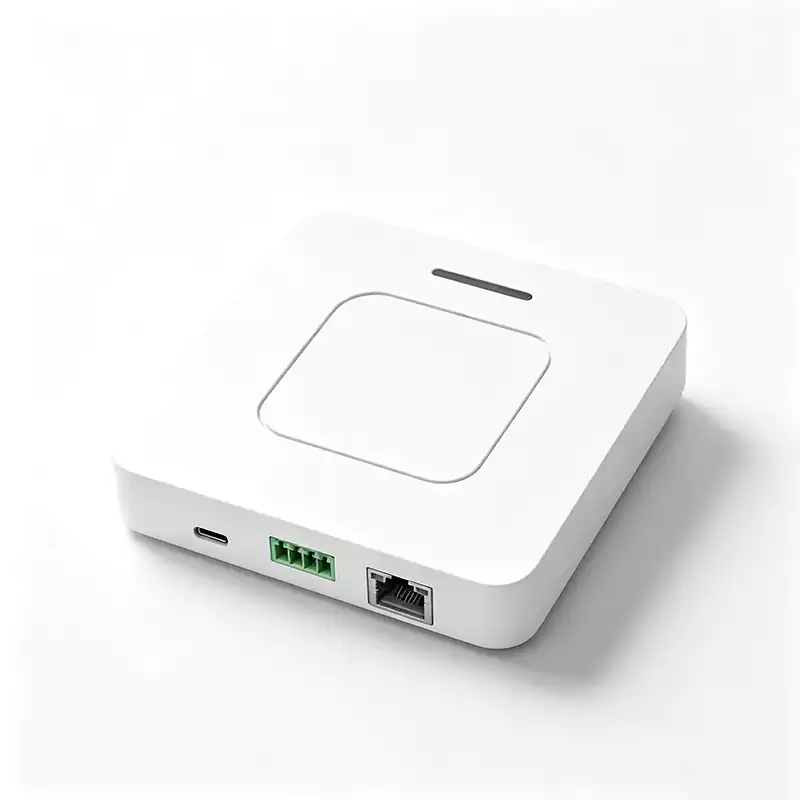
LG620 Indoor LoRaWAN Gateway
SX1302 · 4G Cat1 + Ethernet fallback · RS485
Why most “indoor gateways” let you down halfway
We've debugged enough smart building nightmares to know the pattern: you deploy a dozen environmental sensors across a warehouse or multi-tenant office, and three months later the gateway drops offline because the Ethernet cable got unplugged or the guest WiFi throttled your UDP traffic. Or worse—you install a LoRa gateway in a basement boiler room where LTE is weak and running Cat6 costs a fortune. Traditional single-backhaul gateways turn into bricks the moment your primary link coughs.
That's exactly why we built the LG620 differently. It's not another repackaged Raspberry Pi with a SX1301 hat. We designed it for field technicians who curse under their breath when a gateway fails silently at 2 AM.
Three hard advantages over conventional LoRa gateways
1️⃣ Dual backhaul with true active failover
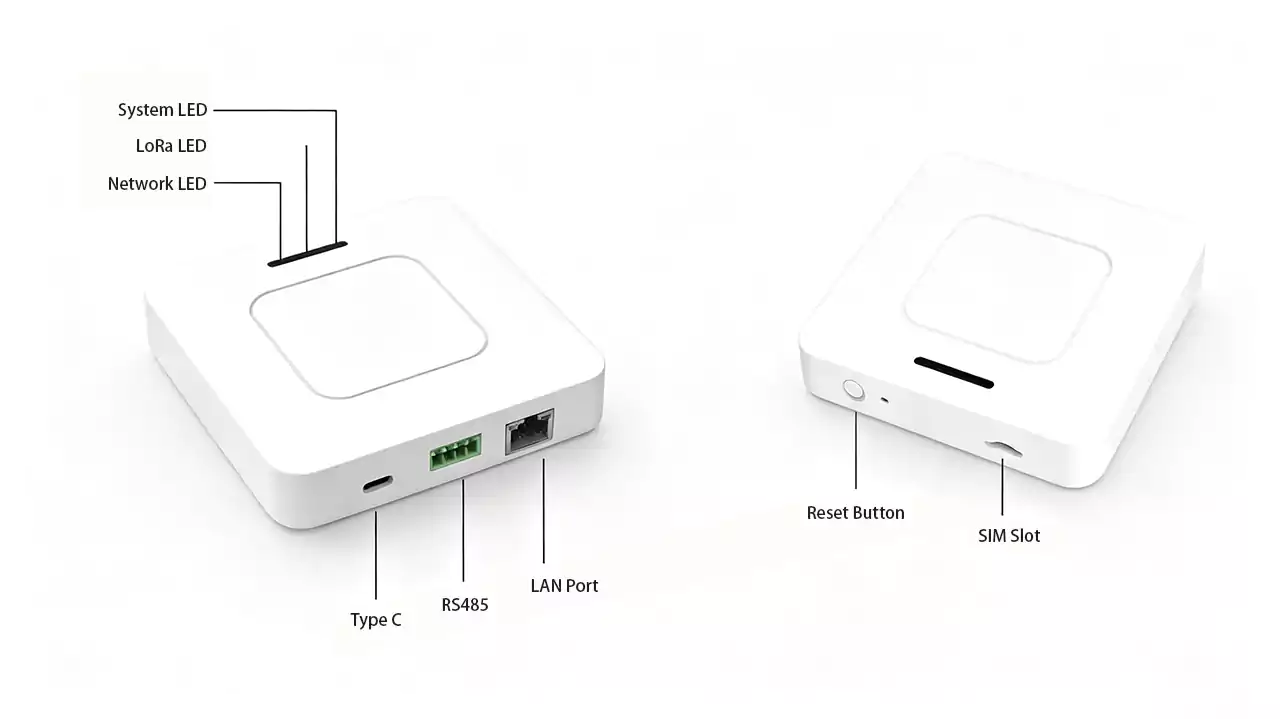
LG620 packs both 4G Cat1 (full-duplex, not just NB-IoT) and 10/100 Ethernet. The failover isn't some software polling hack – the underlying Linux stack monitors link health and switches within ~15 seconds. The RS485 port gives you a third option: serial tunneling for legacy PLC or Modbus RTU devices.
2️⃣ SX1302 – not the old 1301
Semtech's SX1302 chipset gives you 62.5% lower power consumption and up to 8 channels with superior interference rejection. Compared to first-gen indoor gateways still shipping with SX1301, the LG620 handles dense urban environments with ease.
3️⃣ Industrial temperature range in a plastic shell
Most plastic indoor gateways are rated 0°C to +40°C – useless for uninsulated attics or parking garages. LG620 runs from -40°C to +85°C with passive cooling. No fan, no noise, no winter freeze-outs.
Before you even unbox the unit, consider this: the LG620 arrives pre-integrated with ChirpStack and AWS IoT Core examples, saving you roughly two weeks of MQTT bridge coding. The onboard 8GB eMMC stores packet logs for up to 30 days of offline buffering. And because we expose a full-shell console via UART, you can run custom packet forwarders or even a lightweight Node-RED instance directly on the gateway.
Selecting the right indoor gateway: is LG620 for you?
We designed the LG620 for indoor, wall-mount or desktop scenarios where you need to bridge 10 to 500 LoRa end nodes to a cloud platform. It fits perfectly when:
Your site has unreliable wired internet – 4G Cat1 acts as a backup channel.
You require RS485 to ingest data from Modbus sensors and forward that combined dataset via LoRaWAN or MQTT over cellular.
You want to avoid proprietary cloud lock-in – the LG620 runs standard Packet Forwarder or Basic Station, compatible with TTN, ChirpStack, Loriot, or your own LNS.
But if you need GPS location onboard or PoE power injection, look elsewhere. Also, for full IP67 outdoor pole mounting, the plastic enclosure won't survive monsoons – that's why we make a separate ruggedized line.
Technical specifications – LG620
| CPU / Core | Cortex-A7, 528MHz |
|---|---|
| Memory | 512MB DDR3 RAM + 8GB eMMC flash |
| LoRa Chipset | SX1302 + SX1250 Tx/Rx frontend |
| Frequency Bands | EU868, US915, CN470, AS923 (customizable on order) |
| Max Tx Power | +30dBm (1 Watt) – adjustable 0dBm to +30dBm |
| Receiver Sensitivity | -97dBm @ SF7, -94dBm @ SF12 (typical, 125kHz) |
| Backhaul Interfaces | 4G Cat1 (LTE-FDD: B1/B3/B5/B8/B20/B28; 2G fallback) + 10/100M Ethernet RJ45 |
| Wired I/O | RS485 (Modbus RTU capable), 1x USB 2.0 host |
| Antenna Connector | SMA female for LoRa (external antenna included in some kits) |
| Operating Temperature | -40°C ~ +85°C (tested 1000h @ 85°C) |
| Power Supply | 5V DC / 2A (USB-C or terminal block, no PoE) |
| Dimensions & Weight | 120mm × 60mm × 20mm, approx. 200g |
| Certifications | CE, FCC, RoHS, RCM (pending for some variants) |
What the LG620 is NOT (honest limitations)
Not an outdoor gateway – The plastic housing is IP40 (indoor use only). If you need pole-mount or direct rain exposure, check our LG650 (IP67 aluminum enclosure).
No GPS / GNSS onboard – For time synchronization we use NTP over Ethernet/4G. If you need geolocation of moving assets, pair it with a separate GPS beacon.
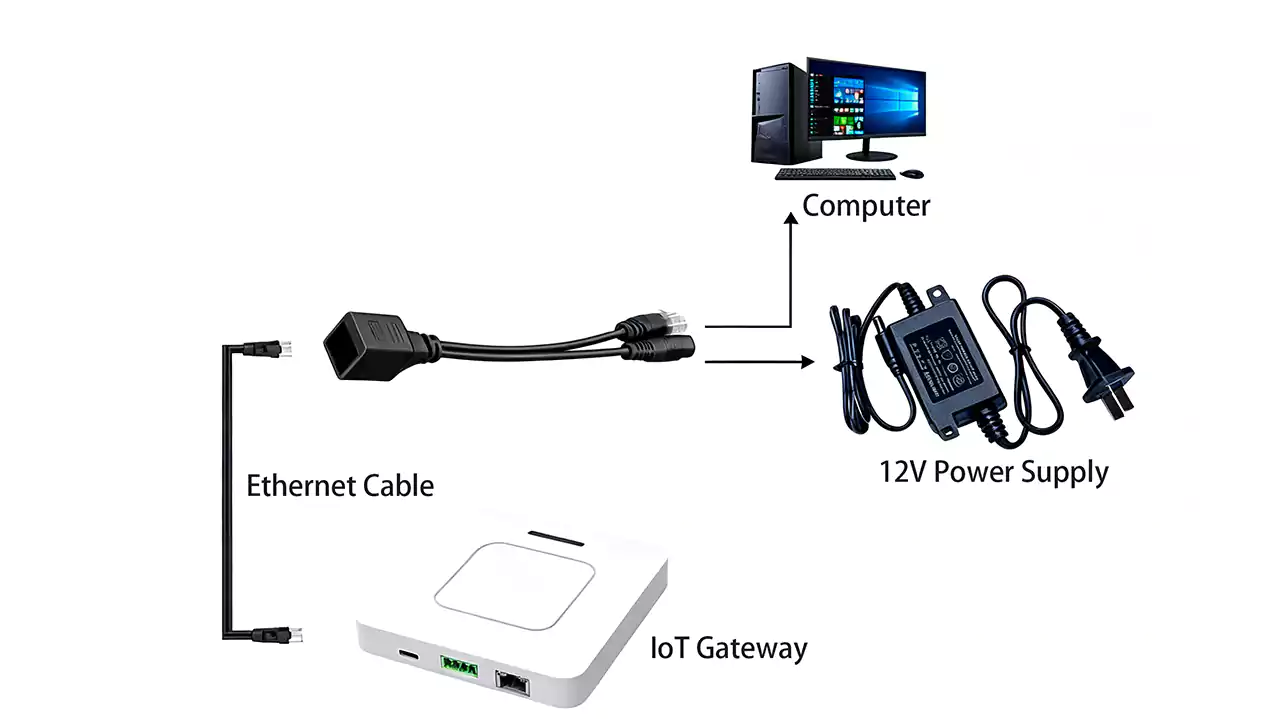
No Power over Ethernet – Input is 5V DC only. PoE injectors can damage the board. Use a quality 5V 2A power adapter.
4G Cat1 throughput limitation – It's designed for IoT telemetry (max ~10Mbps), not for tunneling large firmware updates or streaming video.
Single LoRa concentrator (8 channels) – The SX1302 handles up to 8 simultaneous spreading factors, but for massive dense deployments (>2000 end nodes with sub-second TX intervals), you'd need a professional 64-channel gateway.
Real deployment: 6-story smart office retrofit
A property management firm in Singapore deployed 14 LG620 units – one per floor's electrical closet – plus 310 LoRaWAN leak and PIR sensors. Each LG620 uses 4G as primary uplink and falls back to wired Ethernet during maintenance windows. The RS485 port on each gateway also reads water submeters from the basement, pushing Modbus data into their cloud dashboard. Nine months later, zero gateway downtime reported. That's the kind of boring reliability we aim for.
Another customer in Minneapolis uses LG620s in an unheated warehouse (drops to -30°C) to monitor overhead door sensors. The gateways run on 5V power from industrial battery backups. No heater, no condensation issues – the wide temperature range actually works.
Product functional diagram
Connection & wiring guide
Ready to stop wrestling with unreliable gateways?
Order a developer kit or request a sample for your pilot project. We provide full documentation, SSH access, and 1-year hardware warranty.
Request pricing & sample →Mobile: [+86] 189-7480-9810 (supports calls, WhatsApp, and WeChat)
Email: sales@cumond.com
Website: www.iot-solutionhub.com