
G626G: The 10-Gram Badge That Helps Prevent Childhood Myopia
UV Sunlight Detection · NB-IoT · BLE 5.0 · IP67
This is not a positioning badge. It's a public health tool.
Childhood myopia is rising globally. The World Health Organization identifies insufficient outdoor time as a primary modifiable risk factor. The mechanism is well-documented: exposure to outdoor-intensity light stimulates retinal dopamine release, which inhibits excessive eye elongation.
Schools know this. The challenge is measurement. How do you track how much time each student actually spends outdoors — not in a corridor with windows, not in a covered playground, but under direct daylight? Paper logs are unreliable. Teacher observation is impractical at scale. GPS cannot distinguish indoor from outdoor in a multi-story school building.
How it works
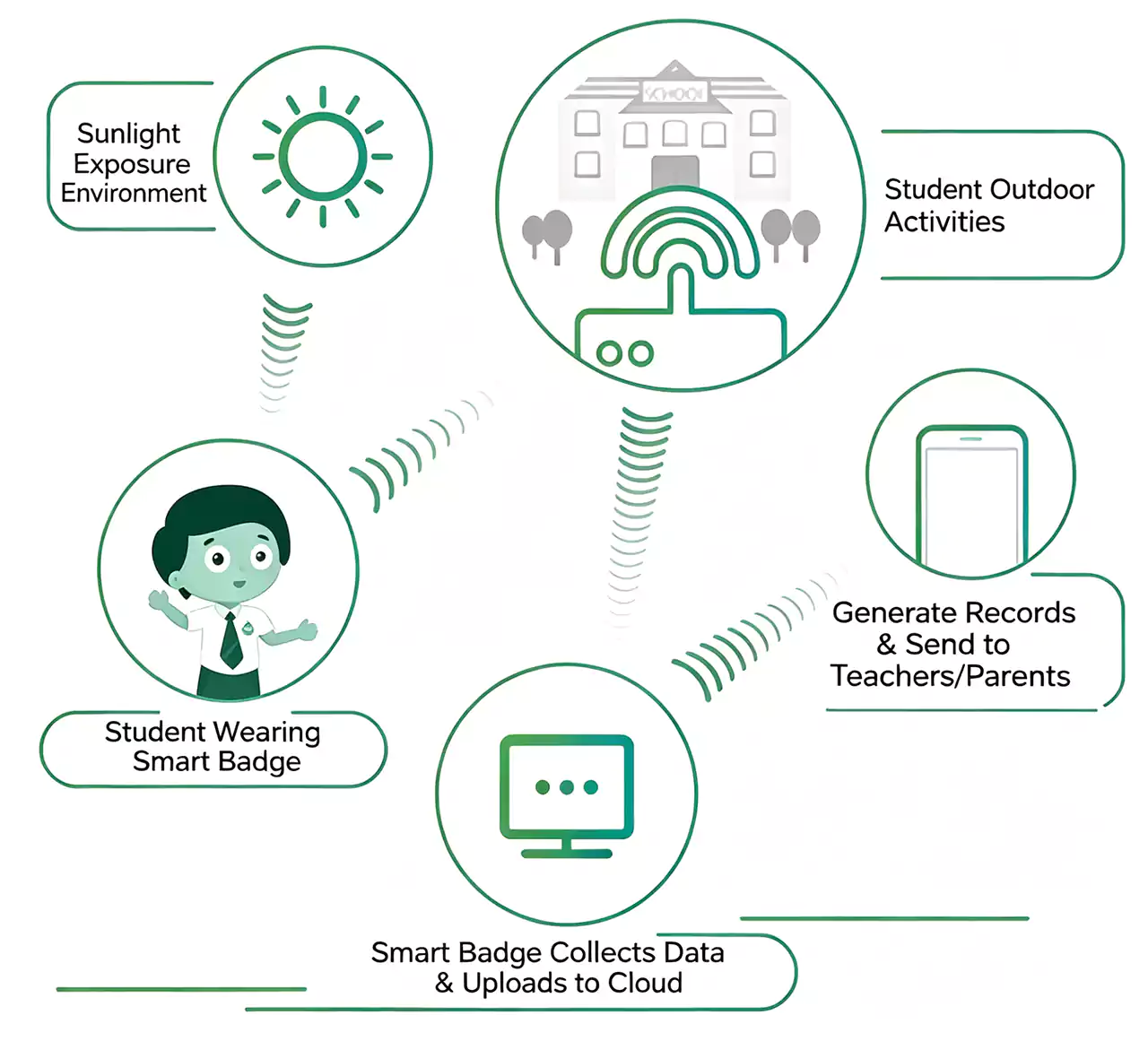
The UV sensor continuously monitors ambient light. When UV is detected above a configurable threshold, the badge records the start of an outdoor session. When UV drops below the threshold, the session ends. The data includes timestamps and duration — not just "45 minutes outdoors today," but "09:15-09:37 and 14:02-14:35."
The accelerometer tracks physical activity during outdoor sessions. Step count and motion intensity are recorded alongside UV exposure. This distinguishes active outdoor play from passive outdoor sitting — both are beneficial for vision, but the distinction matters for broader health assessment.
Data transmits via NB-IoT to the cloud platform. The pre-installed IoT SIM (3-year) handles periodic data uploads. The platform aggregates data per student, per class, per grade, per school — showing outdoor time distribution, trends over weeks and months, and comparisons against recommended daily targets.
Parents and teachers access the data through a mobile app or web dashboard. A student who regularly falls below the recommended 2 hours of daily outdoor time is flagged. A class that consistently underperforms can have its schedule adjusted — more outdoor breaks, outdoor classes when weather permits.
Indoor positioning via BLE beacons (optional). Beacons deployed in classrooms, libraries, and corridors track where students spend their indoor time. Combined with UV outdoor data, the platform provides a complete 24-hour activity profile: outdoor time, indoor classroom time, movement between zones.
Why NB-IoT?
The G626G uses NB-IoT rather than 4G Cat.1 for three reasons:
Power efficiency. A 60mAh battery running NB-IoT lasts 7-10 days. The same battery on 4G Cat.1 would last perhaps 2-3 days. For a device that should disappear into a student's uniform and be forgotten, NB-IoT's low-power profile is the right choice.
Cost. NB-IoT modules and data plans are cheaper per unit than 4G. For a school deploying 1,000 badges, the per-unit cost difference is substantial.
Coverage. NB-IoT penetrates deeper into buildings than 4G — important in multi-story school buildings with thick concrete walls. The data payload is small (timestamp + UV duration + step count), well within NB-IoT's bandwidth.
Physical design
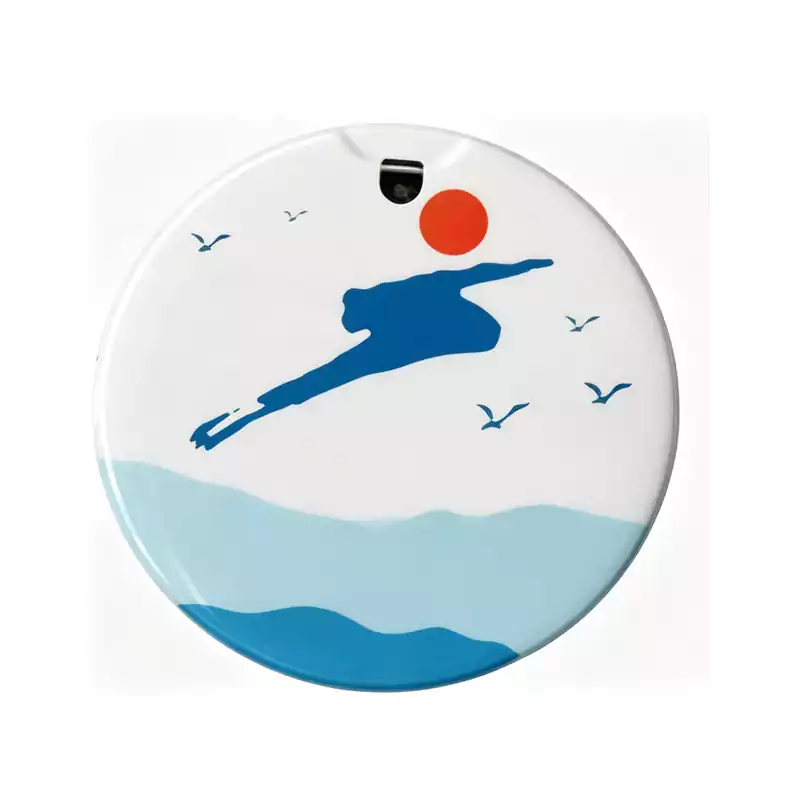
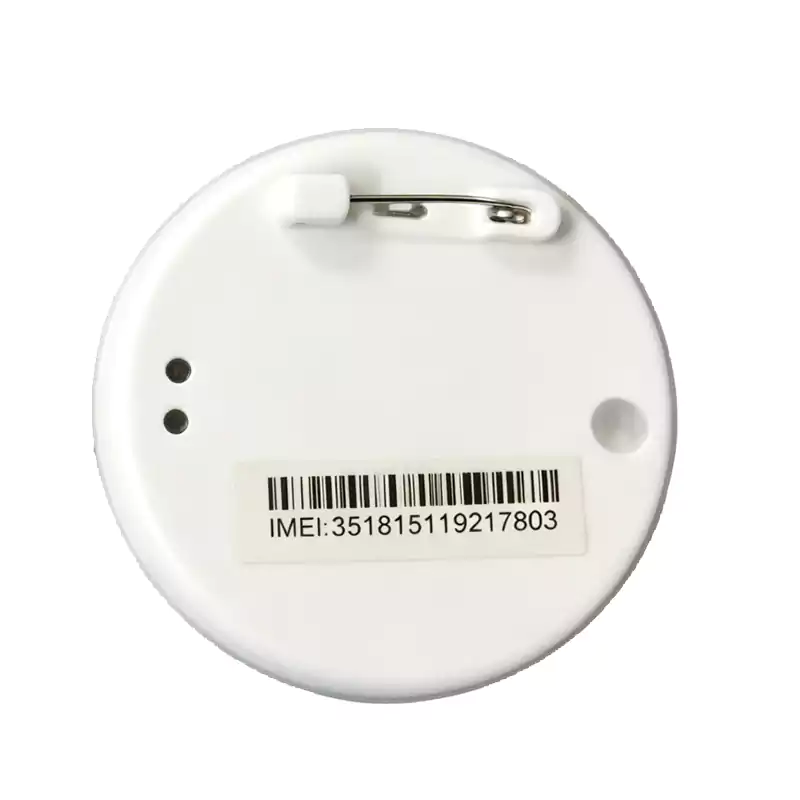
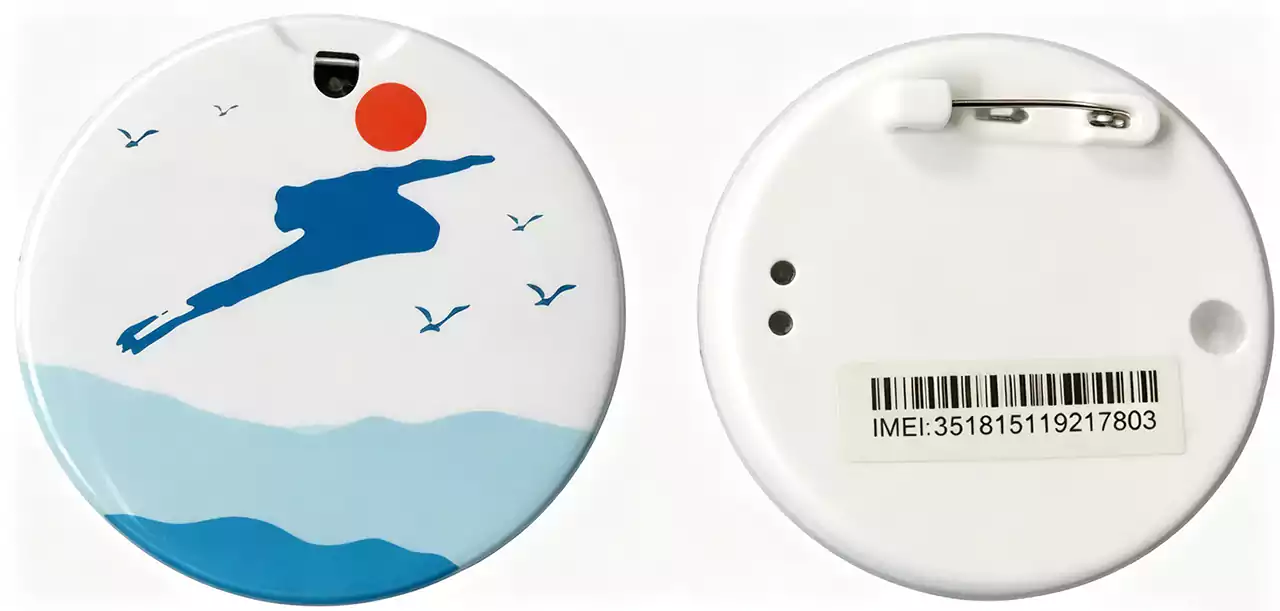
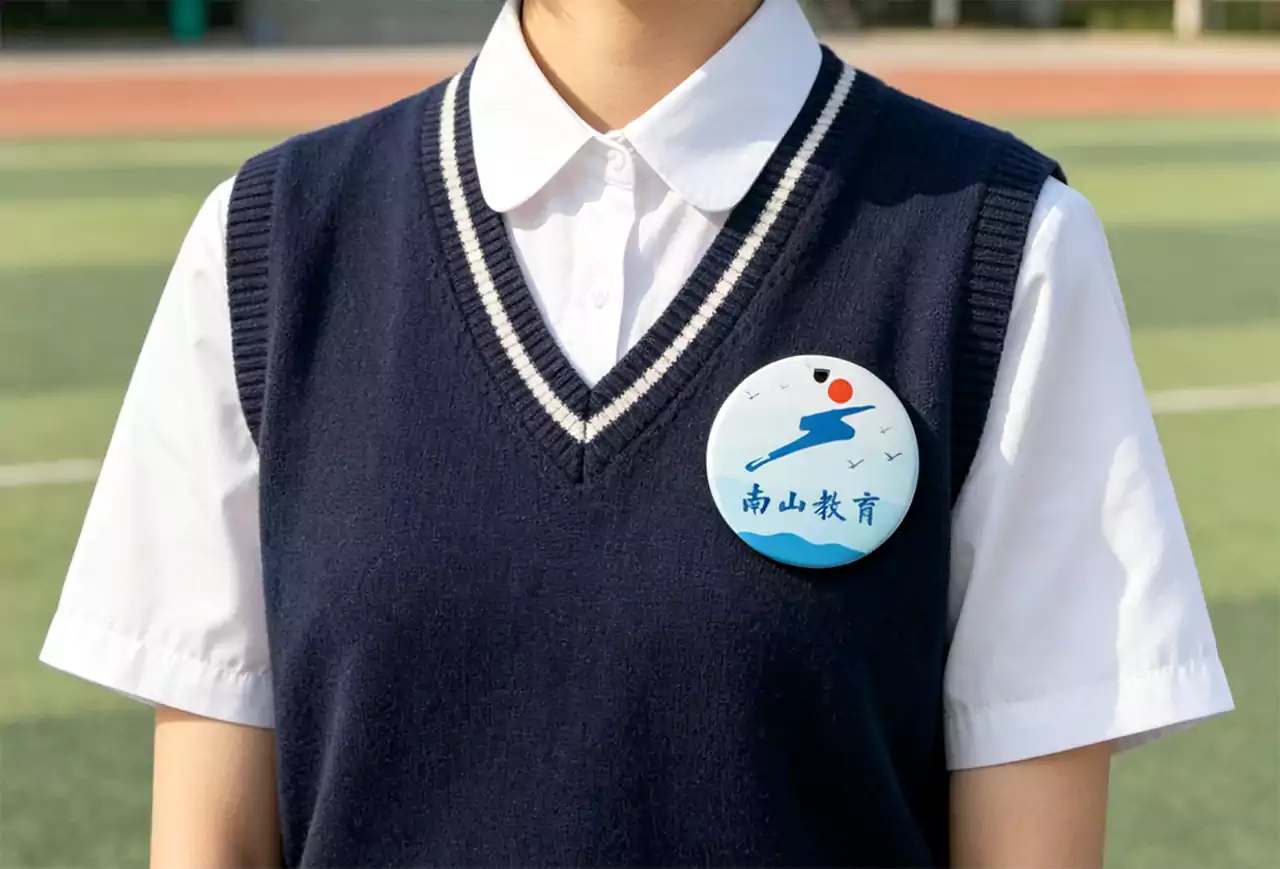
The G626G is 46mm in diameter, 6.5mm thick, and weighs 10 grams. It pins to a uniform like a standard school badge. It is smaller and lighter than the G628G positioning badge (50mm, 19g) because it carries fewer components — no GPS, no WiFi, just UV sensor, accelerometer, BLE, and NB-IoT.
IP67 waterproof. Sealed body. Survives rain, hand-washing splashes, and the occasional puddle. A 10-gram device falling from a student's chest hits the ground with negligible force — the light weight combined with the PC+ABS housing provides effective drop protection without additional shock-absorbing design.
One button. Press and hold for SOS. The badge sends an alert with its last known location (via BLE beacon proximity, if beacons are deployed) to the platform. This is a secondary function — the G626G's primary purpose is health monitoring, not emergency response.
Magnetic charging. A 60mAh polymer battery charges in 1 hour. The magnetic connector is small and easy to align — important when a teacher is charging 40 badges at the end of a school day.
Comparison with the G628G positioning badge
| Feature | G626G | G628G |
|---|---|---|
| Primary function | UV outdoor time + activity tracking | Indoor/outdoor positioning + patrol check-in |
| UV sensor | ✓ | ✗ |
| GPS/BDS | ✗ | ✓ |
| WiFi positioning | ✗ | ✓ |
| Cellular | NB-IoT | 4G Cat.1 |
| Dimensions | 46 × 6.5mm | 50 × 8.5mm |
| Weight | 10g | 19g |
| Battery | 60mAh | 450mAh |
| Battery life | 7-10 days | 5-7 days (20+ standby) |
| Waterproof | IP67 | IP54 |
| Best for | Myopia prevention, outdoor activity compliance | Student safety, attendance, location tracking |
Use both together: A school district can deploy G626G badges for myopia prevention and G628G badges for safety and attendance. The two products share the same cloud platform, and data from both can be viewed side by side. A student could wear either or both depending on the school's priorities.
Cloud platform analytics
The free cloud platform provides school-specific analytics:
Per-student daily outdoor time: Displayed as a bar chart against the recommended 2-hour target
Class-level aggregation: Average outdoor time per class, identifying classes that need schedule adjustments
Trend analysis: Weekly and monthly trends — is outdoor time decreasing as the semester progresses?
Activity intensity: Step count and motion data layered onto outdoor time
Alerts: Automatic notification when a student's weekly outdoor time falls below a configurable threshold
The platform also supports indoor BLE beacon positioning for complete time-at-location tracking when beacons are deployed.
Full technical specifications
| Model | G626G |
|---|---|
| Dimensions/Weight | 46 × 6.5mm / 10g |
| Material | PC+ABS, white (custom colors available) |
| Mounting | Standard pin |
| Chipset | BLE 5.0 SoC, NB-IoT modem |
| SIM | Embedded chip SIM (3-year IoT SIM) |
| Network | NB-IoT: 850/900MHz |
| Sensors | UV light sensor, accelerometer (step count, motion detection) |
| Positioning | BLE beacon proximity (1-3m with beacons) |
| LED | Red/blue (charging, charged, network status, SOS, low battery) |
| Button | 1 physical button (SOS + power) |
| Battery | 60mAh polymer, magnetic charging, 1h charge |
| Battery life | 7-10 days normal use |
| Waterproof | IP67 |
| In the box | Badge ×1, magnetic charge cable ×1, manual ×1 |
| Optional | Bluetooth iBeacons |
What the G626G is NOT
It does not have GPS or WiFi positioning. It cannot track outdoor location. It only knows whether the wearer is outdoors (via UV) or indoors near a BLE beacon.
It does not have a display. Status is communicated via LED color and blink patterns.
UV detection is sunlight-dependent. The sensor registers UV from natural sunlight. It may not register outdoor time on heavily overcast days or under dense shade structures. The threshold is configurable to match local conditions.
60mAh is not a large battery. Normal use means 7-10 days. Cold weather reduces this. Plan for weekly charging.
It is not a replacement for the G628G if location tracking or patrol check-in is required. The G626G measures sunlight exposure and activity. The G628G measures location and attendance. They are complementary, not interchangeable.
Deployment example: school district myopia prevention program
A school district with 5,000 students deploys G626G badges across all primary schools.
Morning assembly (08:00): Students collect charged badges from classroom charging stations. Badges activate automatically when removed from the charger.
School day: UV sensor tracks outdoor time during recess, lunch break, and outdoor classes. BLE beacons in classrooms track indoor attendance.
End of day (16:00): Students return badges to charging stations. Data uploads to the cloud via NB-IoT.
Weekly review: The school health coordinator reviews the dashboard. Class 3B averages 45 minutes of outdoor time per day — well below the 2-hour target. The schedule is adjusted: two additional outdoor breaks added to their timetable.
Monthly report: The district superintendent receives a report showing outdoor time distribution across all schools. Schools with consistently low outdoor time receive priority for timetable reform and outdoor facility improvement.
After one semester, the district correlates outdoor time data with vision screening results. Classes with above-average outdoor time show lower myopia progression rates — data that justifies the program's expansion to all grade levels.
Ready to deploy a myopia prevention program for your school?
Request a sample kit or a technical consultation. We'll help you set up the G626G for your campus, including UV threshold calibration and beacon placement.
Request pricing & sample →Mobile: [+86] 189-7480-9810 (supports calls, WhatsApp, and WeChat)
Email: sales@cumond.com
Website: www.iot-solutionhub.com