
G810: The Tracker That Runs on AA Batteries — No Charger, No Cable, No Downtime
2× AAA · NB-IoT · 6+ Month Standby · 38g
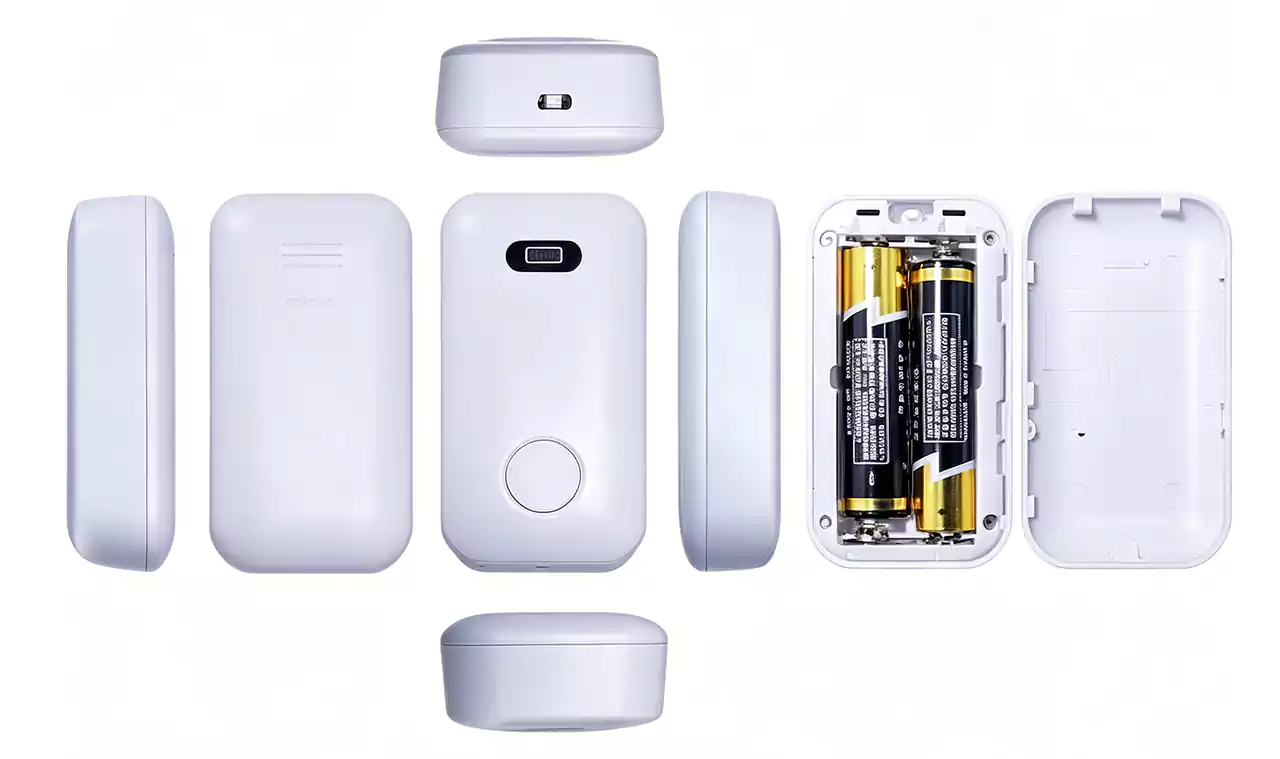
Why dry batteries?
Every other device on this platform needs charging. Magnetic cables, Micro USB ports, charging stations — infrastructure to manage. For deployments where that infrastructure is impractical, the G810 takes a different approach.
Two standard AAA alkaline batteries. Replaceable anywhere. No charger. No cable. No downtime waiting for a charge cycle. When the battery dies, swap in two new AAAs from any convenience store and the device is back online immediately.
This matters for:
Luggage tracking: A tracker placed in a suitcase that travels for weeks, then sits in storage for months. You don't want it to be dead when you need it.
Elderly SOS alarms: A device that sits on a bathroom wall or bedside table for months, waiting for one button press. It must work when pressed, without anyone remembering to charge it.
Asset tracking for seasonal equipment: Construction tools, event equipment, agricultural machinery — assets that are deployed intensively for weeks, then stored for months. The tracker needs to be alive when the asset comes out of storage.
Two versions, one hardware platform
| Feature | G810A (Tracker) | G810B (Alarm) |
|---|---|---|
| NB-IoT | ✓ | ✓ |
| GPS/BDS | ✓ | ✗ |
| WiFi positioning | ✓ | ✗ |
| BLE 4.2 | ✓ | ✓ |
| Accelerometer | ✓ | ✗ |
| Ambient light sensor | ✓ | ✗ |
| SOS button | ✓ | ✓ |
| Best for | Luggage, assets, personnel tracking | Fixed-location SOS alarm for elderly care |
Both share the same physical design: 59 × 33 × 16.5mm, 38 grams, white housing, one-button interface. The difference is sensor configuration and firmware.
G810A: The full-positioning tracker
Built for assets and personnel that need location tracking with zero charging infrastructure.
Positioning:
GPS/BDS outdoor (5-20m accuracy)
WiFi fingerprinting (10-50m depending on AP density)
Cellular LBS fallback
BLE beacon proximity (1-3m with beacons)
The NB-IoT modem transmits position data on a configurable interval. The accelerometer and ambient light sensor work together to optimize power:
Motion-triggered reporting: When stationary, the device sleeps. When movement is detected, it wakes, acquires a position fix, and reports.
Light-aware sleep: The ambient light sensor detects whether the device is in a dark enclosed space (inside a suitcase, a drawer, a storage locker). In darkness, positioning is suppressed — a tracker inside a suitcase in an aircraft cargo hold cannot get a GPS fix, and trying would waste battery. When light returns, positioning resumes.
Use cases:
Airline luggage tracking
Rental equipment monitoring
Seasonal asset tracking (construction, agriculture)
Personnel tracking in environments without daily charging access
G810B: The fixed-location SOS alarm
Stripped-down hardware. No GPS. No WiFi. No accelerometer. No light sensor. Just NB-IoT, BLE 4.2, and one button.
Purpose-built for elderly care and independent living: A G810B is mounted on the bathroom wall, placed on the bedside table, or worn on a lanyard. When the user presses the SOS button, the device sends an alert with its BLE beacon proximity data (if beacons are deployed) via NB-IoT to the cloud platform.
Why no GPS? Indoor SOS alarms don't need GPS. The device is fixed to a known location. BLE beacons provide room-level positioning if multiple alarms are deployed across a facility. Removing GPS removes cost, removes power draw, and simplifies the device to its essential function: one button that always works.
6+ month battery life with zero maintenance. No charging cable for an elderly user to fumble with. No charger to lose. When the LED indicates low battery, a family member or caregiver swaps in two fresh AAAs. The device is back online in seconds.
Use cases:
Bathroom and bedside SOS alarms for elderly living alone
Nursing home supplementary call points (corridors, common rooms)
Independent living facilities where residents need a simple, reliable call button
The light-aware power optimization (G810A)
The ambient light sensor on the G810A is an unusual feature at this product tier. It serves one specific purpose: preventing useless GPS acquisition attempts.
A GPS module in a dark, enclosed space — a suitcase, a metal locker, a shipping container — will search for satellites and fail. Each failed search drains significant battery. Over weeks, this can deplete the device.
The G810A's light sensor prevents this. When ambient light is below a configurable threshold, GPS acquisition is suspended. The device continues to report its last known position and status via NB-IoT, but it does not waste battery hunting for satellites it cannot see. When the device is removed from the dark enclosure and exposed to light, GPS acquisition resumes automatically.
NB-IoT: the right network for a 6-month battery
The G810 uses NB-IoT rather than 4G Cat.1 for the same reason as the G626G: at ultra-low data rates, NB-IoT sips power at a rate 4G cannot match.
850/900MHz support — compatible with China Mobile, China Telecom, China Unicom
Removable Nano SIM — pre-installed with a 3-year IoT SIM; replaceable if needed
Data payload — small periodic bursts (position, battery level, status). NB-IoT's bandwidth ceiling is irrelevant for this application.
The removable SIM is notable — most other devices in the product line use embedded or non-removable SIMs. The G810's Nano SIM slot allows the user to swap in a local carrier SIM for international deployments.
Physical design
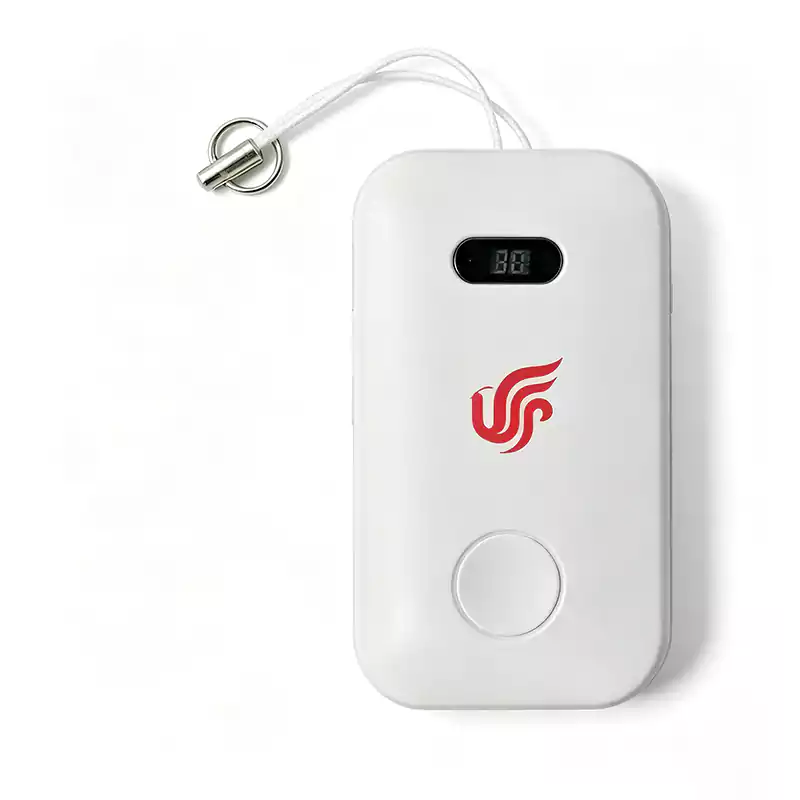
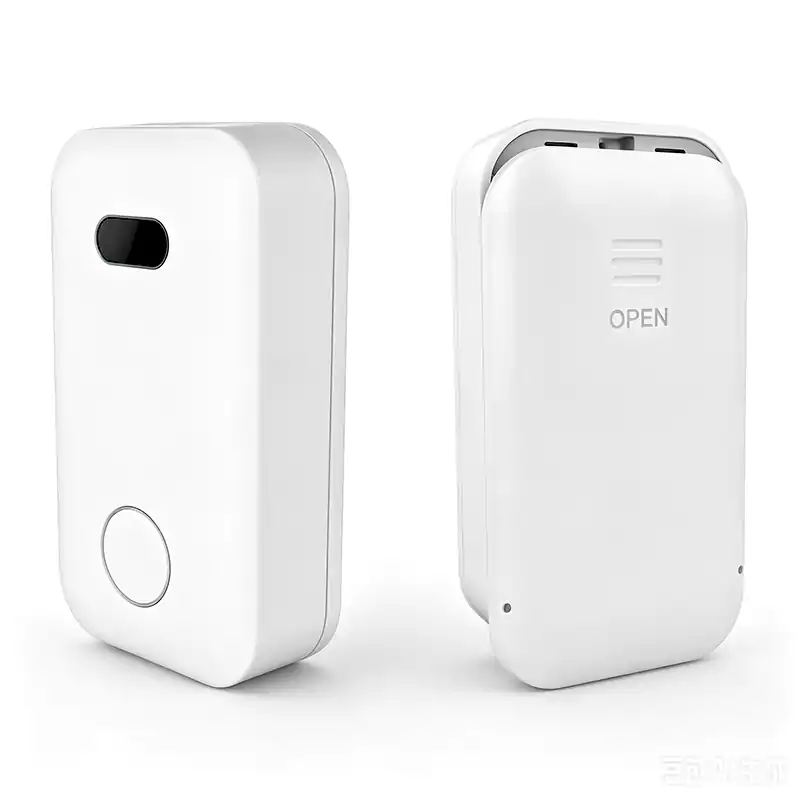
Compact and light: 59 × 33 × 16.5mm, 38 grams including two AAA batteries. Fits in a pocket, clips to a lanyard, or mounts with adhesive.
IPX4 splash-resistant: Not immersion-rated, but protected against splashes from any direction. Suitable for bathroom installation (G810B) and outdoor use in light rain.
One button: SOS and power. Press and hold to trigger an alert. The LED confirms with a red flash.
LED indicators: Red/blue for network registration status, SOS confirmation, and low battery warning.
Replaceable battery compartment: Standard slide-off cover. Two AAA cells (included). User-replaceable in seconds.
Comparison within the tracking product line
| Feature | G810A | G638G | G908G | G805B |
|---|---|---|---|---|
| Form factor | Compact box | Helmet module | Large asset tag | Lanyard badge |
| Weight | 38g | 30g | 360g | 50g |
| Network | NB-IoT | 4G Cat.1 / LoRa | 4G Cat.1 | NB-IoT |
| Battery type | 2× AAA (replaceable) | 800mAh rechargeable | 6000mAh rechargeable | 1000mAh rechargeable |
| Battery life | 6+ months standby | 20+ days standby | 200+ days standby | 20+ days standby |
| Charging | None (swap batteries) | Magnetic USB | Magnetic USB | Micro USB |
| GPS/BDS | ✓ | ✓ | ✓ | ✓ |
| Light sensor | ✓ | ✗ | ✗ | ✗ |
| Waterproof | IPX4 | IPX7 | IP67 | IPX5 (sleeve) |
| Best for | No-charging deployments | Helmet mounting, worker safety | Ultra-long standby assets | Personnel, patrol, SOS |
Choose G810A if: You cannot guarantee access to charging infrastructure. The device will be deployed for months at a time in locations where charging is impractical — luggage, seasonal equipment, remote assets.
Choose G638G if: You need 4G Cat.1, a helmet-mounted form factor, and IPX7 waterproofing.
Choose G908G if: You need the maximum possible battery life from a rechargeable device and the weight is acceptable.
Choose G805B if: You need a lanyard badge form factor with NB-IoT and a larger rechargeable battery.
Full technical specifications
| Model | G810A (tracker) / G810B (alarm) |
|---|---|
| Dimensions/Weight | 59 × 33 × 16.5mm / 38g (with batteries) |
| Material | Environmentally friendly plastic, white (custom colors available) |
| Battery | 2× AAA alkaline (replaceable), included |
| Battery life | 6+ months standby |
| Network | NB-IoT: 850/900MHz (China Mobile, China Telecom, China Unicom) |
| SIM | Removable Nano SIM (3-year IoT SIM pre-installed) |
| Positioning (G810A) | GPS/BDS + WiFi + LBS + BLE beacon proximity |
| Positioning accuracy | 5-20m outdoor; 10-50m WiFi; 1-3m BLE with beacons |
| Sensors (G810A) | Accelerometer, ambient light sensor |
| Bluetooth | BLE 4.2 (beacon scanning, OTA firmware upgrade) |
| Button | 1 physical button (SOS + power) |
| LED | Red + blue (network, SOS, low battery) |
| Waterproof | IPX4 splash-resistant |
| Geofencing | Circular and custom shape |
| History | 100+ days trajectory data |
| Alerts | SOS, geofence breach, low battery, power-off |
| In the box | Device ×1, AAA batteries ×2, lanyard ×1, manual ×1 |
| Optional | Bluetooth iBeacons |
What the G810 is NOT
It does not use rechargeable batteries. The user replaces AAA cells. This is an advantage for deployments without charging infrastructure; it is a recurring cost for deployments with frequent use.
It does not have a display. Status is via LED.
G810B does not have GPS, WiFi, accelerometer, or light sensor. It is a fixed-location or lanyard-worn SOS alarm, not a tracker.
IPX4 is splash-resistant, not immersion-rated. Do not submerge.
BLE 4.2 (rather than 5.1) is sufficient for beacon proximity but lacks the long-range and AoA capabilities of newer BLE versions.
6-month standby assumes default reporting intervals and typical usage patterns. Continuous GPS tracking will drain batteries faster. The light sensor and motion sensor extend battery life by suppressing unnecessary positioning attempts.
Deployment scenarios
G810A: Airline luggage tracking
A traveler places a G810A in checked luggage before a multi-leg international flight. The device reports its position at the departure gate. During the flight, the light sensor detects the dark cargo hold and suppresses GPS. On arrival, exposure to daylight triggers an immediate position fix. The traveler confirms the bag arrived at the correct airport before leaving the arrivals hall.
G810A: Construction equipment fleet
A rental company deploys G810A trackers on portable generators, light towers, and welding rigs. Equipment sits in a yard for weeks between rentals. No one charges batteries between deployments. When a generator is loaded onto a truck, the accelerometer detects movement and begins reporting. When it sits idle in the yard, the device sleeps. Six-month standby means batteries are replaced during annual maintenance, not weekly.
G810B: Elderly independent living
A G810B is mounted on the bathroom wall of an elderly person's apartment. A second unit is placed on the bedside table. The resident wears a lanyard with a third unit. No charging cables. No daily routine to remember. When a battery indicator shows low, the visiting family member swaps AAAs in seconds. SOS alerts go to the caregiver's phone with BLE beacon proximity for room identification.
Ready to deploy a tracker with zero charging infrastructure?
Request a sample kit or a technical consultation. We'll help you select the right G810 version for your luggage, asset, or elderly care program.
Request pricing & sample →Mobile: [+86] 189-7480-9810 (supports calls, WhatsApp, and WeChat)
Email: sales@cumond.com
Website: www.iot-solutionhub.com
```